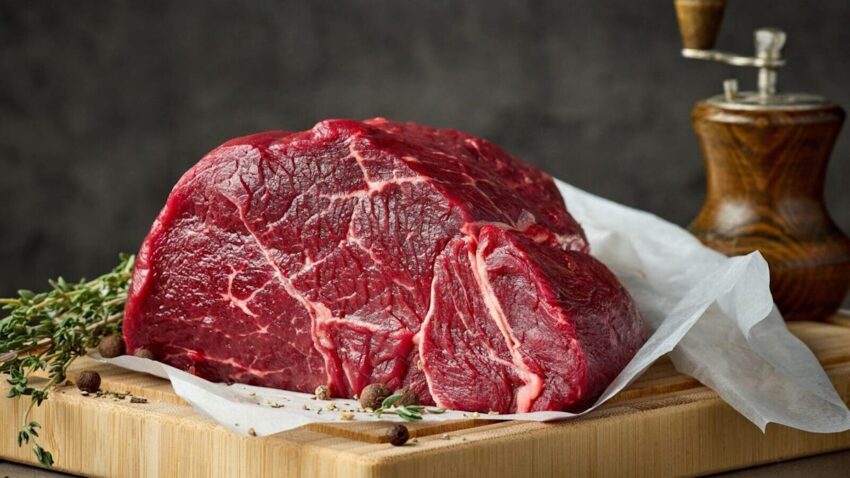
For years, the question seemed straightforward: what role should red meat play on the American plate?
Then, in 2019, a series of reviews and recommendations published in Annals of Internal Medicine reopened the debate.
The NutriRECS panel concluded that the evidence supporting a reduction in red and processed meat consumption was low certainty and that the expected health benefits were very small, challenging a conversation that had already shaped how many people thought about meat and nutrition.
Advertisement
Advertisement
The red meat debate showed how quickly a scientific paper can become a public conversation about everyday choices.
The reaction was not only about the findings themselves. It was about what those findings meant, how researchers reached their conclusions, and why experts could look at the same body of research and emphasize different parts.
The Paper That Reopened the Argument
The 2019 Annals publication changed the conversation by challenging how dietary recommendations should be built.
The review package examined evidence on red and processed meat consumption, including studies on health outcomes, dietary patterns, and people’s preferences. The researchers used the GRADE system to assess evidence certainty, resulting in low-certainty ratings for much of the available nutrition research.
Advertisement
Advertisement
The NutriRECS panel issued a weak recommendation that adults could continue their current levels of consumption of both unprocessed red meat and processed meat. The panel said the possible benefits of reducing intake appeared to be very small.
The recommendation was not unanimous. Three of the 14 panelists disagreed with the conclusion. Their disagreement focused on how to interpret the evidence and how much weight to give different types of studies.
Why The Same Research Created Different Reactions
The disagreement centered on how scientists should weigh different kinds of evidence.
Much nutrition research is observational. Researchers follow eating patterns over time and examine whether certain habits are linked with particular health outcomes.
Advertisement
Advertisement
These studies can reveal important associations, but they cannot prove that one food directly causes a specific outcome. That limitation has long been part of the discussion around dietary research.
After the 2019 reviews, the NutriRECS panel emphasized the low certainty of the available evidence. Critics argued that long-term observational studies still provide valuable information, especially because large controlled dietary experiments are difficult to conduct.
Another question followed: if someone eats less meat, what replaces it? Researchers have considered whether the substitute is a food such as vegetables, legumes, and nuts or another option with a different nutritional profile.
RELATED: 8 Meats You Should Never Grill
The Detail Many People Miss About “Meat”
Researchers often separate different types of meat, even when everyday conversations do not.
The word “meat” can cover very different foods. Scientific discussions commonly distinguish processed meats, including bacon, sausage, hot dogs, and deli meats, from unprocessed red meats such as beef, pork, and lamb.
Advertisement
Advertisement
That distinction matters because research findings differ across categories. Studies have often raised stronger concerns around processed meats, while findings involving unprocessed red meat have been more mixed.
Researchers have also examined possible links between processed meat intake and heart diseases or even diabetes. Those findings are based on observational studies, with some research reporting associations involving processed meat. In the same area of research, findings involving unprocessed red meat have been weaker or not observed in some studies.
For consumers, those differences can disappear quickly. A single word can describe foods that researchers analyze separately.
The Difficult Journey From Research Paper To Dinner Table

Photo Credit: LisaaMC/Deposit Photos
The hardest part of nutrition news is often understanding what a study does and does not say.
A scientific paper rarely arrives with a ready-made answer for daily life. Researchers must consider a study’s design, the strength of the evidence, and the limits of what the data can show.
Advertisement
Advertisement
That detail can be lost when findings move from academic journals into public discussion. A headline may focus on one conclusion, while the comprehensive research includes qualifications that change how the findings should be understood.
The red meat debate became a clear example of the gap between a research paper and how people experience health information.
What Remains After The Headlines Fade
The red meat debate continues because the evidence has never been as simple as the question first appeared.
The research has established several important distinctions. Researchers study processed and unprocessed red meat separately, nutrition research often has limitations, and the foods replacing meat can affect how researchers evaluate dietary changes.
Advertisement
Advertisement
The 2019 controversy did not settle every question surrounding meat and health. Instead, it revealed why the topic remains difficult to reduce to a single recommendation.
A question that began with a familiar food became a discussion about how people interpret information that affects their daily lives.
When health advice gets complicated, what helps you decide which information you can trust?
More Articles You Might Like
The post What’s Really Behind America’s Red Meat Debate? appeared first on FODMAP Everyday.