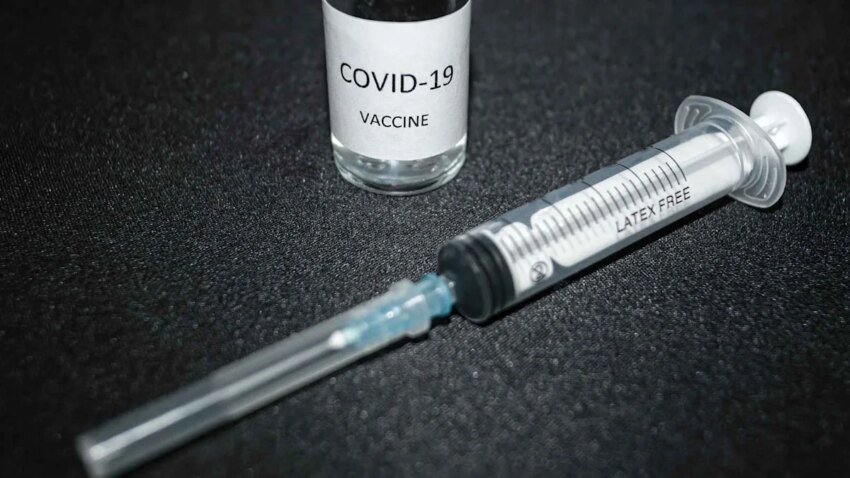
Two people can receive the same vaccine and have entirely different experiences afterward. One develops a fever, while the other feels fine. An international team of scientists studying 171 healthy adults has identified a possible explanation involving bacteria in the digestive system.
The researchers found that certain patterns of gut bacterial activity were associated with fever intensity, and that these differences were detectable before vaccination.
The findings could eventually inform efforts to reduce uncomfortable vaccine reactions. They also offer a closer look at how digestive-system microorganisms interact with the body’s immune defenses.
The First Clues Came From the Digestive System
Participants who developed higher fevers after vaccination showed distinct patterns of gut bacterial activity beforehand, suggesting that differences in their intestinal environment may have influenced how intense their reactions were.
The study, titled The Human Gut Microbiome Primes Fever After Vaccination, involved researchers from institutions including the Max Planck Institute for Biology Tübingen.
Scientists examined adults aged 18 to 40 receiving mRNA COVID-19 vaccines. They monitored body temperature and collected data on gut bacteria and immune activity.
Among participants who later had higher fevers, researchers found increased activity in proteins linked to bacterial movement, along with signs of underlying intestinal inflammation.
Certain bacteria in the Lachnospiraceae family were also linked to these responses.
These observations led scientists to a particular bacterial protein that appeared to influence inflammation.
Related: Pancreatic Cancer Vaccine Shows Promise, but the Brutal Truth Behind the Trial Should Worry Americans
Why Flagellin Became Central to the Discovery
The researchers identified flagellin, a protein found in certain gut bacteria, as an important contributor to the inflammatory processes associated with fever, helping explain how microbial activity in the digestive system may influence the body’s response to vaccination.
Flagellin forms part of structures called flagella, which some bacteria use to move. The immune system can recognize this protein and activate inflammatory signaling.
Greater flagellin-related microbial activity was associated with higher fever responses among participants.
Ruth E. Ley of the Max Planck Institute for Biology Tübingen described the finding in the institution’s published statement.
“Our findings show that microbial flagellin is one contributor to this baseline immune state,” Ley said.
Her statement identifies flagellin as one factor influencing vaccine reactions, not a complete explanation for every fever.
To investigate the relationship further, the researchers conducted controlled experiments using mice and laboratory models.
What Happened When Scientists Tested the Bacteria
Experiments involving mice and human intestinal models provided additional evidence linking gut microorganisms to inflammatory responses after vaccination, strengthening researchers’ understanding of how certain bacteria may influence the body’s reaction to a vaccine.
The team transferred gut microbiomes from human participants into mice raised without microorganisms.
After vaccination, mice receiving microbiomes from people with stronger fever responses developed greater inflammation.
Scientists also examined human intestinal organoids, laboratory models that reproduce certain features of intestinal tissue, to investigate how microbial activity interacts with inflammatory signaling.
The experiments strengthened the evidence beyond the associations observed in human participants.
However, they did not establish a clinical method to predict or prevent fever in individual patients.
Stronger Fever Did Not Mean Higher Antibody Responses

Photo Credit: YURIMA/Deposit Photos
The study found that inflammatory differences associated with flagellin did not alter antibody responses measured after vaccination, suggesting that stronger fever symptoms do not necessarily mean the body develops greater immune protection.
According to a scientific summary published by the American Association for the Advancement of Science, increased inflammation linked to microbial flagellin did not produce corresponding increases in antibody responses after vaccination.
The finding challenges a common assumption about vaccine side effects.
Experiencing a fever does not automatically indicate greater immune protection, just as feeling fine afterward does not mean a vaccine failed to produce an immune response.
Antibody measurements represent only one component of immunity, so the study does not show that all participants developed the same level of protection.
Still, the results provide useful context for interpreting physical reactions without treating discomfort as a measure of vaccine effectiveness.
Diet May Offer Another Direction for Research
The scientists also examined how dietary patterns might influence gut bacteria and their role in inflammatory responses after vaccination, although the findings remain preliminary, and no specific diet or dietary change has been proven to prevent vaccine-related fever in humans.
Researchers identified associations between participants’ reported eating patterns and their fever responses.
In laboratory experiments, certain food additives increased bacterial flagellin production. A high-fat diet resembling a Western dietary pattern also intensified inflammatory vaccine responses in mice.
Kelsey E. Huus, one of the researchers, acknowledged the limitations in the Max Planck Society’s published account.
“While we could not show that diet determines vaccine responses in humans,” Huus said.
The findings point to further investigation rather than a reason to change eating habits before vaccination.
Additional human studies would be needed to determine whether modifying the gut microbiome could safely reduce unwanted reactions without compromising vaccine effectiveness.
The original investigation also focused on healthy younger adults receiving mRNA COVID-19 vaccines, leaving its relevance to other populations and vaccine types unresolved.
For scientists, the next challenge is moving from understanding these biological connections to determining whether they can improve the vaccination experience.
The discovery has identified one piece of that process. Whether it can eventually lead to practical ways of reducing vaccine side effects remains an open question.
Could understanding the role of gut bacteria eventually help scientists reduce uncomfortable vaccine reactions without compromising the protection vaccines provide?
More Articles You Might Like:
The post Scientists Discover Why Some People Develop Fevers After Vaccination While Others Don’t appeared first on FODMAP Everyday.