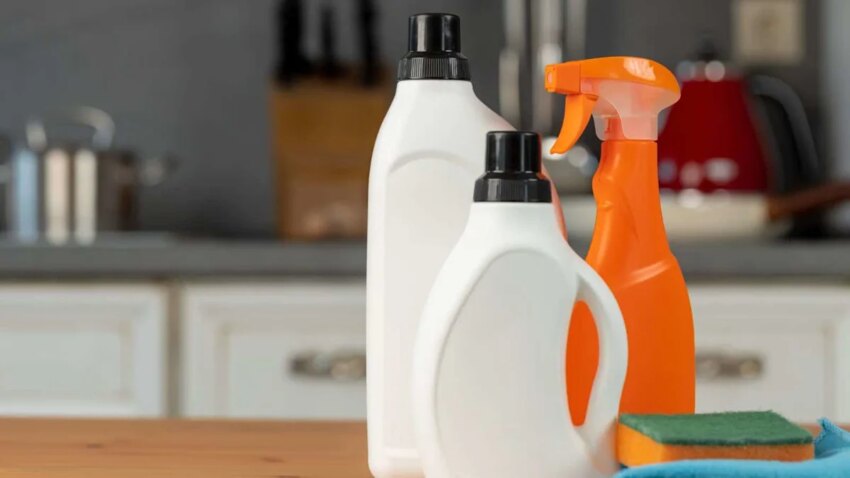
Lemon, pine, lavender. Those scents have become almost automatic signals that a home is clean. Spray the counter, mop the floor, wipe the bathroom sink, and the fragrance seems to confirm the job is finished. But researchers at Purdue University say that familiar “clean” smell may come with something you cannot see.
Their research suggests that scented cleaning products can trigger a rapid burst of tiny airborne particles inside the home, including products marketed as natural. The particles are not visible, and most people would have no immediate clue they are there. The question is what happens when those particles become part of the air people breathe.
The researchers are not suggesting people stop cleaning. Lead researcher Brandon Boor says the goal is to help consumers make informed choices, not create fear. The findings were presented at an American Chemical Society meeting in Chicago.
What Happens In The Air While You Mop
It comes down to the same compounds that give cleaners their scent.
Boor, an assistant professor of civil and construction engineering at Purdue, studies indoor air quality. He and colleague Nusrat Jung began examining cleaners and disinfectants during the COVID-19 pandemic, and they quickly noticed how many products rely on strong fragrances.
Advertisement
Advertisement
Those scents come from compounds that can evaporate from sprayed droplets and freshly cleaned surfaces. Terpenes and terpenoids, including pine, lemon, thymol (thyme), and linalool (lavender), can react with ozone in indoor air. That reaction creates particles that then grow.
Ozone can enter homes from outside air, and some indoor devices can also produce it. Scientists have known for years that pine-tree terpenes react with ozone outdoors, although the process happens more slowly because forests usually contain much lower concentrations.
Boor says airborne terpenes during cleaning can reach tens or even hundreds of times the levels found in forest air.
Related: 5 Cleaning Products Professional Cleaners Often Skip at Home
Billions Of Particles In A Matter Of Minutes
A model house on Purdue’s campus let the team watch it happen.
The researchers used a campus model house designed to resemble a real home, complete with a working kitchen, bathroom, and wood flooring. That allowed them to recreate common cleaning routines instead of testing products in a laboratory setting alone.
Advertisement
Advertisement
They examined scented conventional liquid cleaners, along with disinfectant sprays and wipes containing botanical ingredients.
In the results presented at the ACS meeting, mopping floors, spraying countertops, and wiping surfaces produced billions or even trillions of particles, depending on the product. Most were between 1 and 30 nanometers across.
The speed was one of the most striking findings. Particles formed and grew within minutes. Boor explained: “By the time you finish cleaning up an indoor space, you’ve already formed a lot of nanoparticles and inhaled them.”
Why You Probably Wouldn’t Notice
Your nose says fresh, and your air monitor may not disagree.
So many cleaning products are heavily scented partly because of the experience they create. Boor says: “That’s often to create a pleasant smellscape in the indoor space. But clean air should not smell like highly concentrated citrus fruit. It should not really smell of anything.”
Advertisement
Advertisement
The problem is that many household air quality monitors are not designed to detect particles this small. A person could therefore see no warning on a device even as particle levels change.
Particles at this scale can travel deep into the lungs. Researchers say they may contribute to irritation and inflammation, and some may move into the bloodstream.
Boor also compared the respiratory dose from these particles with exposure near a busy road. He noted that the dose can be comparable to, or greater than, what someone would inhale while standing outside in traffic. The particles are chemically different from traffic pollution, and the comparison refers only to the amount inhaled, not overall health risk.
Why The “Natural” Label Didn’t Help

Image Credit: artfully/123RF
Plant-based fragrance is still reactive chemistry.
The researchers saw particle formation with both conventional cleaners and products containing botanical ingredients. Terpenes naturally occur in substances such as pine and citrus oils, but that does not mean they stop reacting once they enter indoor air.
Advertisement
Advertisement
The California Air Resources Board has previously examined cleaning products and indoor air quality. Its research found that added fragrance can account for a large share of volatile organic compounds in many products.
In a study of 21 cleaning products and air fresheners, 12 contained terpenes or other compounds that react with ozone. Terpenes made up between 0.2% and 26% of the products tested. In rooms with elevated ozone, terpene-containing cleaners produced formaldehyde and ultrafine particles.
The products themselves generally released pollutants below levels of concern. The concern came from what happened afterward, when those chemicals reacted in the air.
The Disinfecting Lamp Twist
A device meant to clean the air intensified particle formation in one test.
Boor and Purdue professor Ernest Blatchley later examined what happened when scented surface cleaners were used alongside germicidal far-UV (UV-C) lamps designed to disinfect indoor air.
Advertisement
Advertisement
Those lamps interact with oxygen and can produce ozone. Inside the model house, ozone levels rose to roughly 20 to 40 parts per billion, a level comparable to, though somewhat below, the outdoor measurements recorded during the experiments.
With more ozone available and terpenes released from cleaning products, nanoparticle production increased further. The researchers emphasized that this was an experimental setup, and the findings do not show how often people actually use these lamps while cleaning.
What To Change Before Your Next Cleaning Day
None of the advice involves giving up cleaning.
Boor’s team recommends choosing fragrance-free or low-fragrance products when possible and avoiding combining multiple scented products during the same cleaning session. They also suggest using an exhaust fan or opening a window and avoiding scented cleaners while an ozone-producing device, such as a far-UV-C lamp, is operating.
Advertisement
Advertisement
The California Air Resources Board recommends using only as much product as needed, rinsing surfaces afterward when appropriate because residue can continue reacting with ozone, and ventilating during cleaning and for several hours afterward.
It also identifies infants and young children, professional cleaners, people working in small enclosed spaces, and those with lung or heart disease as groups that may be more vulnerable.
The EPA has also noted that volatile organic compounds (VOCs), which many cleaning products release, are often found at higher concentrations indoors than outdoors and can remain after an activity ends.
What smell says “clean” in your house, and could you live without it?
More Articles You Might Be Interested in:
Advertisement
Advertisement
The post Your Favorite Scented Cleaner May Be Filling Your Home With Tiny Airborne Particles appeared first on FODMAP Everyday.